
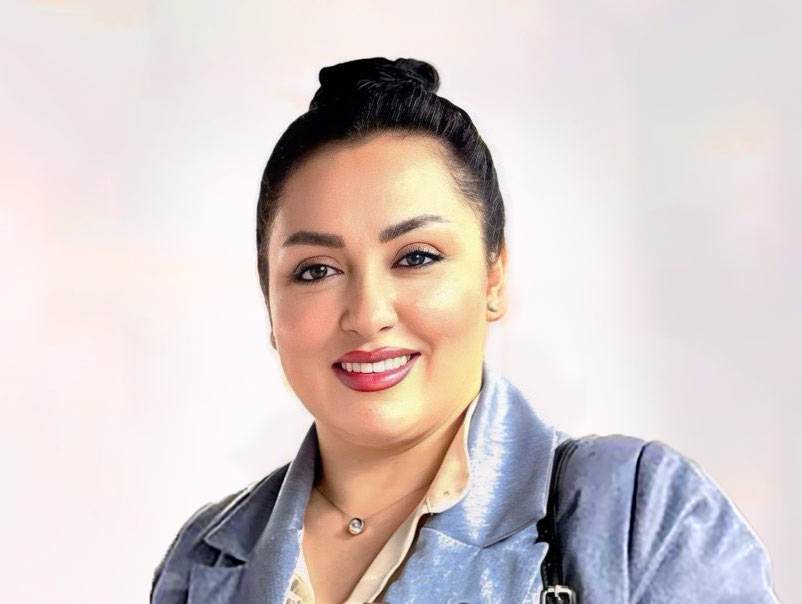
About Melika Adibzadeh:
I am Melika Adibzadeh, was born in 1979.
I have two bachelor's degree in business economics and judicial law. I started learning and practicing Nastaliq calligraphy since I was a teenager and achieved a high rank in Nastaliq.
After that, I studied Iranian miniatures and have created artworks in this field. After learning miniature painting, I learned gilding from different masters. So recently I learned Moalla calligraphy and uses modern calligraphy in my artworks.
I have participated in various exhibitions including Word Art 2023.
In Dubai World Art 2024, I have tried to show different artworks by combining miniature motifs and traditional Iranian gilding with modern calligraphy.With calligraphy I can Show Hope in each line and Combine my feeling with love.
Something you should know:
Iranian traditional art is a rich and vibrant cultural heritage that dates back thousand of years. It encompasses a wide range of artistic forms, including Caligraphy, miniature painting, metal works, gilding, weaving, and architecture.
One of the most important aspect of Iranian traditional art is Calligraphy.
Iranian calligraphers has been renowned for the mastery of the art form and have produced some of the most beautiful and elaborate Calligraphy works in the world.
The practice of Calligraphy in Iran has long been associated with spirituality and the pursuit of beauty and excellence.

Today Iranian Calligraphy continues to be a vibrant and dynamic art form with many contemporary artists, drawing inspiration from traditional technique and styles to create new and innovate artworks.
Iranian calligraphers are recognized as one of the most important and influential forms of Caligraphy in the world and continues to be a source of inspiration and pride for Iranians both at home and aboard.
In addition to Caligraphy Iranian miniature painting is also a prominent art form . Miniature paintings are highly detailed and often depict scenes from Persian literature and history.
Weaving is another important aspect of Iranian traditional art . Persian carpets in particular are world renowned for their beauty and quality Persian carpets are often adorn with intricate floral, designs, and geometric patterns from gilding (tazhib)art.
Tazhib (gilding) is an Arabic word that has been derived from “Zahab”. “Zahab” means gold and Tazhib means gilding and adding golden shine to margins and surfaces. Tazhib means gilding; It is the art of gilding book pages, calligraphy pieces, and margins of paintings, especially pages of the Holy Quran.
This art was popular before Islam as well and was called goldsmithing (Zarnegari) then. After the advent of Islam, it was used in Iran to decorate Qurans. The calligraphic and gilded Qurans of the early centuries of Islam are similar to the decorative paintings of the Sassanid period.